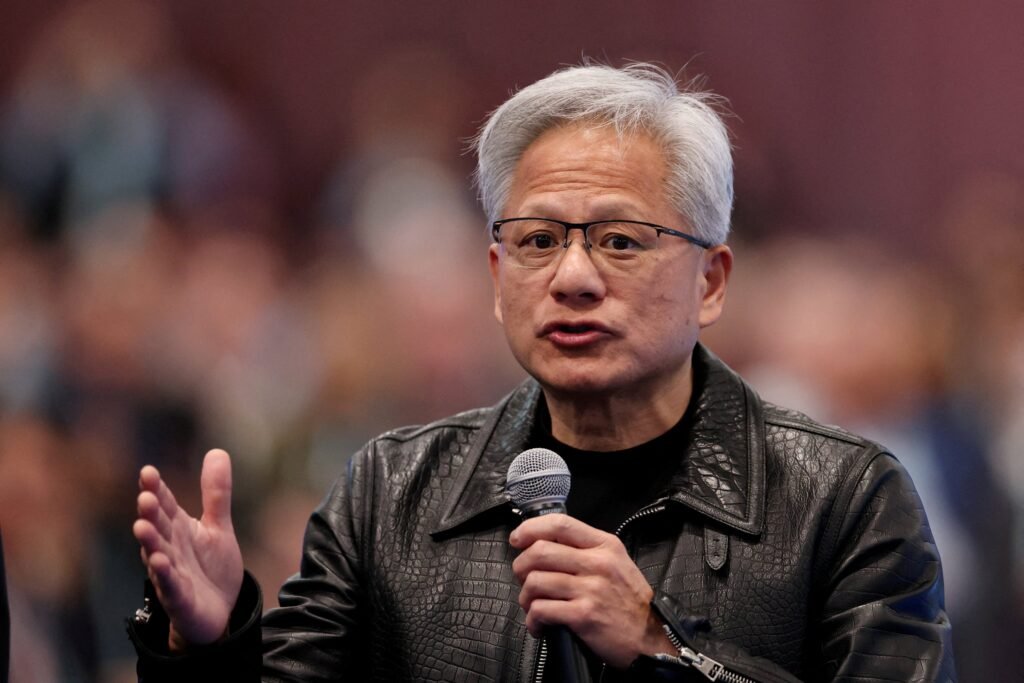
The technology industry has been shaken by the dramatic leadership transition surrounding long-time co-founder and former Jensen Huang Nvidia CEO figurehead. Following months of internal dynamic shifts and rising market scrutiny, Huang’s departure has sparked widespread debates across Wall Street and Silicon Valley. What was once viewed as an unbreakable reign over the world’s chief AI chipmaker has transformed into one of the most complex corporate shakeups in recent tech history.
Pre-Downfall Stock Transfers Raise Financial Questions
Months before the public disruption at Nvidia escalated, regulatory filings revealed that Huang made significant personal financial moves. According to reports from Barron’s, Huang transferred billions of dollars in Nvidia stock to his heirs prior to his downfall. The timing of these massive equity movements has drawn intense attention from analysts evaluating corporate governance and insider expectations prior to the executive departure.
These financial arrangements coincided with what market commentators described as the gradual unwinding of the “Bank of Jensen Huang,” signaling structural shifts in how Nvidia’s equity-backed influence operated internally.
Family Influence and Internal Corporate Friction
Central to the internal friction at Nvidia was the rapidly rising profile of Madison Huang, Jensen Huang’s daughter. Reports from The New York Times and NDTV highlighted that Madison Huang had become an increasingly powerful voice within the organization. Her expanding authority reportedly created tension among veteran executives, with insiders describing an atmosphere where senior leadership felt as though they were “walking on eggshells.”
This concentration of familial influence raised governance concerns among institutional investors, complicating the leadership structure as the company navigated high-stakes artificial intelligence product cycles.
The Debate Over Reinstatement: Trump, Altman, and the Board
In the wake of Huang’s exit, a polarizing debate erupted over whether Nvidia should reinstate its legendary co-founder. The campaign to bring Huang back gained significant political visibility when former President Donald Trump publicly backed calls for his reinstatement as CEO. However, reporting from CNBC clarified that Nvidia’s board of directors was not actively considering bringing Huang back, prioritizing corporate stability and strategic oversight moving forward.
Industry peers also weighed in on the sudden departure. OpenAI CEO Sam Altman, who notably experienced his own brief dismissal in 2023, publicly expressed empathy for Huang’s situation. Speaking on the exit, Altman referred to Huang as a tech hero while reflecting on the volatile nature of visionary leadership in high-tech corporate environments.
Market Impact and What Lies Ahead for Nvidia
The turmoil surrounding the CEO transition has temporarily overshadowed core business metrics, turning upcoming financial reports into a backdrop for governance questions. As Bloomberg reported, the uncertainty regarding Huang’s ouster has loomed large over market sentiment, forcing investors to weigh Nvidia’s technical dominance against potential management instability.
As Nvidia enters a new post-Huang era, the board faces the challenge of preserving the company’s AI hardware leadership while establishing a modernized, transparent governance structure detached from its original founder’s inner circle.