

Artificial Intelligence Trends: How AI Shapes 2026 Industry
Artificial intelligence has transitioned from an experimental innovation to an operational necessity. Heading through 2026, enterprise adoption, industrial automation, and specialized domain models are redefining how business leader scale technology investments. Data highlights that organizations are moving past initial pilot projects toward proving, scaling, and sharing measurable enterprise outcomes.
Enterprise AI and Business Transformation
According to research highlighted by Business News Daily and Forbes, artificial intelligence is fundamental to modern business transformation. Companies rely on AI to automate complex workflows, extract actionable insights from unstructured datasets, and deliver hyper-personalized customer experiences.
Rather than relying solely on generalized large language models (LLMs), enterprise strategies increasingly prioritize domain-specific tools tailored to strict governance standards and niche operational needs. This focus on practical implementation helps businesses boost efficiency while maintaining control over data security and compliance.
Healthcare AI: Scaling Operational and Clinical Success

Healthcare remains one of the most active sectors for AI innovation. Industry insights from Healthcare Dive and leaders like Philips emphasize a structured approach to medical technology deployment: prove what works, scale what works, and share what works.
Key clinical applications driving growth include:
- Diagnostic Assistance: Machine learning algorithms analyzing radiology scans and pathology slides for faster initial assessments.
- Workflow Automation: Ambient AI tools writing clinical documentation to reduce administrative burnout among physicians.
- Predictive Analytics: Systems forecasting patient deterioration and optimizing hospital bed management.
Industrial Automation and AI in Manufacturing
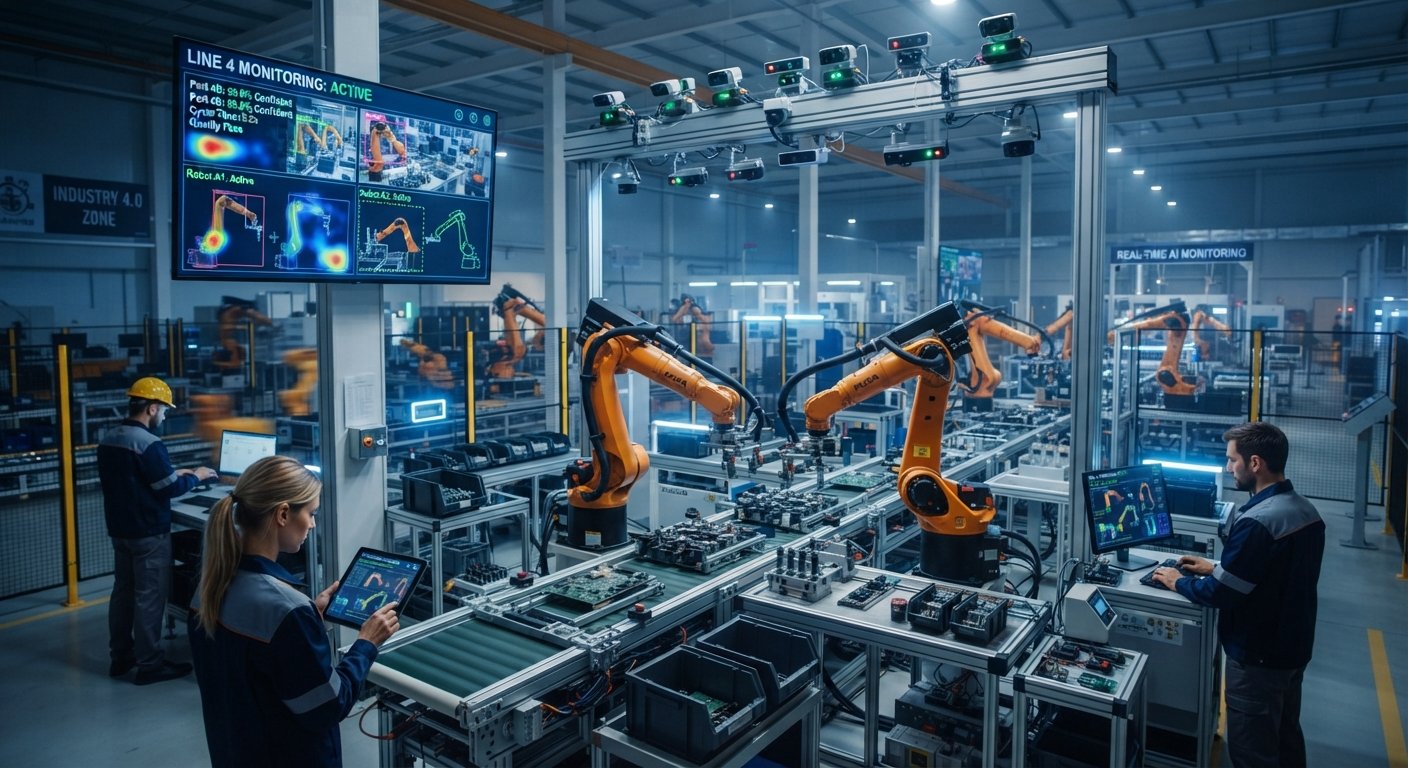
Industrial applications are witnessing similar acceleration. Initiatives highlighted by the National Institute of Standards and Technology (NIST) demonstrate how artificial intelligence is transforming smart manufacturing ecosystems.
Factory floors increasingly integrate computer vision for real-time quality assurance, predictive maintenance models to limit equipment downtime, and supply chain tracking powered by machine learning algorithms. These capabilities allow manufacturers to build resilient production lines capable of dynamically adapting to supply disruptions.
Market Sentiment and Top AI Stocks
Financial markets continue to reflect confidence in artificial intelligence growth. Reports from U.S. News Money analyzing top market performers indicate that investor focus has expanded beyond hardware chipmakers. Capital is flowing steadily into software providers, cloud infrastructure vendors, and enterprise platforms driving practical AI integrations across industries.
As organizations demand clear return on investment (ROI) from technology purchases, market valuations are increasingly tied to real-world software adoption and sustainable revenue generation.